


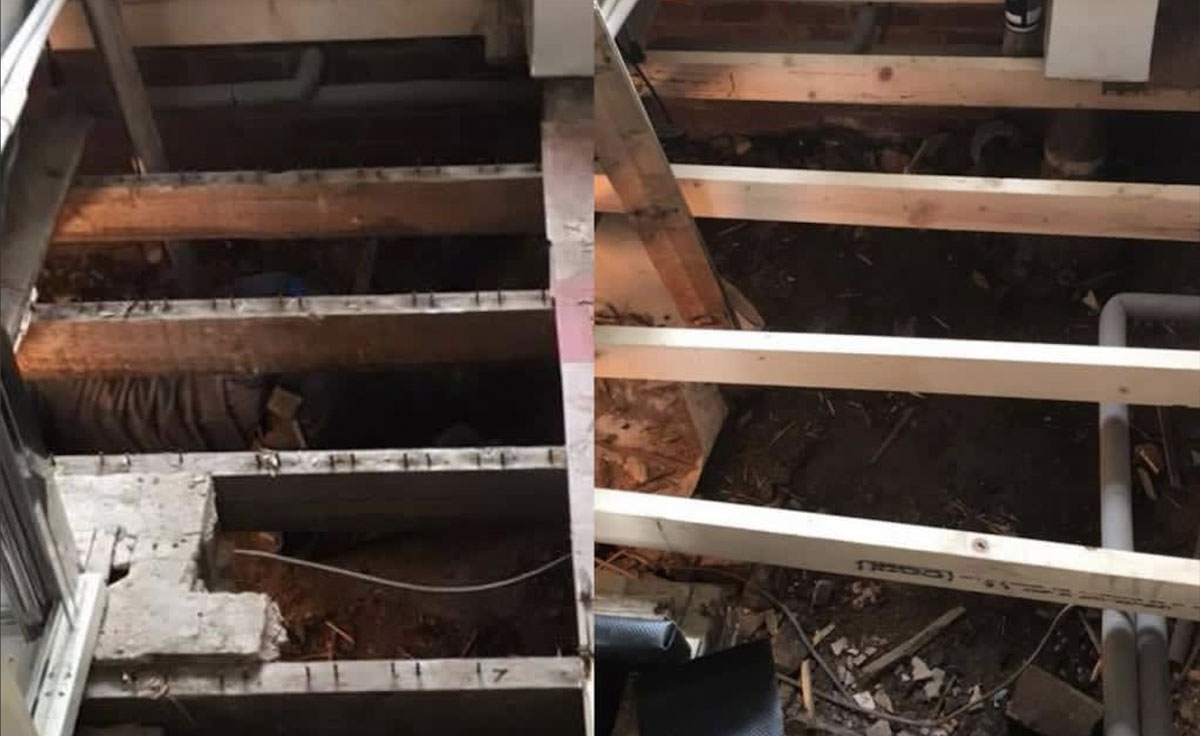
Damp can absolutely damage floorboards and structural timber. In many UK homes, especially older properties with suspended timber floors, moisture can creep in from below, leak in from plumbing, condense in poorly ventilated rooms, or rise through masonry and surrounding materials. Left untreated, damp can lead to cupping, warping, staining, mould, rot, loose boards and even weakened joists.
The good news is that not every damp timber floor needs replacing. If the moisture source is found early and the wood is dried correctly, many floors can be repaired, sanded, refinished or restored. The key is to deal with the cause before carrying out any cosmetic flooring restoration or wood floor repair.
How Damp Affects Floorboards and Timber
Timber is a natural material that absorbs and releases moisture depending on the conditions around it. When the moisture level in the air or subfloor rises, floorboards can take in that moisture and expand. When they dry out again, they contract. A small amount of movement is normal, but repeated or prolonged damp exposure can cause visible and structural damage.
Common effects include:
- Cupping, where the edges of a board rise higher than the centre
- Crowning, where the centre of the board sits higher than the edges
- Warping or twisting, particularly in older softwood boards
- Gaps between boards, usually after timber dries out following moisture exposure
- Staining, dark patches or tide marks
- Mould growth, often with a musty smell
- Soft or spongy timber, which may indicate decay
- Loose nails or fixings, caused by swelling and shrinkage
- Cracking or splitting, especially where boards dry too quickly
In more serious cases, damp can affect the timber below the floorboards, including joists, wall plates and battens. This is when the issue becomes more than a surface problem.
Why UK Homes Are Prone to Damp Floor Problems
Many UK properties have design features and climate conditions that make damp floor issues more likely. Older terraced houses, Victorian and Edwardian homes, cottages and period properties often have suspended timber floors with a void beneath. These floors rely on good airflow through air bricks or vents to keep the timber dry.
If those vents become blocked by soil, paving, insulation, debris or building work, moisture can build up under the floor. Over time, the underside of the boards and joists may become damp, even if the room above looks normal.
Other common UK-specific causes include:
- Poor subfloor ventilation
- Bridged or damaged damp proof courses
- Leaking radiators, pipework or appliances
- Condensation in kitchens, bathrooms and utility rooms
- Rainwater penetration from defective gutters, roofs or external walls
- High external ground levels against the property
- Inadequate insulation or cold spots
- Flooding or escape of water from plumbing
- Wet mopping or over-washing timber floors
Because damp can come from several directions, the visible floor damage is often only a symptom. Before any lasting repair can be made, the source of the moisture needs to be identified.
Signs Your Floorboards May Be Damp
Some damp problems are obvious, such as visibly wet floorboards after a leak. Others are more subtle and develop gradually.
Look out for:
- A persistent musty or earthy smell
- Boards that feel cold, clammy or soft underfoot
- Dark patches around walls, fireplaces or pipe runs
- Peeling paint or flaking finish on wooden floors
- Raised board edges or uneven areas
- New gaps appearing between boards
- Mould on skirting boards or behind furniture
- Rusting floor fixings or blackened nail heads
- Floorboards that bounce more than usual
- Staining near radiators, washing machines, dishwashers or doors
A moisture meter can help confirm whether timber contains excess moisture, but readings need to be interpreted carefully. Timber moisture levels vary depending on the property, season, ventilation and floor construction. If the floor feels unstable, smells damp or shows signs of decay, it is worth getting a professional inspection.
Can Damp Cause Timber Rot?
Yes. If timber stays damp for long enough, it can become vulnerable to fungal decay. The two main types people worry about are wet rot and dry rot.
Wet Rot
Wet rot usually affects timber that remains persistently damp. It often stays close to the moisture source, such as a leaking pipe, damp subfloor or area of water ingress. Timber affected by wet rot may look darker, feel soft, crack in a cubed pattern, or crumble when pressed.
Dry Rot
Dry rot is more serious because it can spread through hidden areas of a building in search of timber. Despite the name, dry rot still needs moisture to start. It is commonly associated with poorly ventilated voids, leaks and long-term damp conditions. Signs may include brittle timber, a mushroom-like smell, cracking, fungal growth or orange-brown spores.
If you suspect rot in joists or structural timber, do not simply sand the boards and refinish them. The affected timber and moisture source must be assessed properly.
What to Do If Your Floorboards Get Wet
If the issue is recent, such as a leak from a pipe or appliance, quick action can reduce the damage.
-
Stop the source of water
Turn off the water supply if needed and prevent any further moisture reaching the floor. -
Remove standing water
Use towels, a wet vacuum or suitable extraction equipment. Avoid letting water sit between boards. -
Increase ventilation
Open windows where practical and use fans to encourage airflow. In winter, gentle heat can help, but avoid excessive direct heat. -
Use dehumidifiers
Dehumidifiers can help remove moisture from the air and speed up drying, especially in enclosed rooms. -
Lift rugs and furniture
Anything trapping moisture against the timber should be removed. Check beneath furniture legs and mats. -
Avoid sanding too soon
Wet or swollen boards may look uneven, but sanding before the timber has dried can make the final floor uneven once the boards shrink back. -
Check below the floor if possible
Water may have reached the subfloor, insulation or joists. Hidden moisture can cause further damage even after the surface appears dry.
For a small spill, thorough drying may be enough. For a major leak, flood or persistent damp, professional drying and inspection are recommended before any decorative work is carried out.
When Can Damp Floorboards Be Restored?
Damp-damaged boards can often be saved if the timber is still structurally sound. Restoration may be possible when:
- The boards have dried to a stable condition
- There is no active leak or ongoing damp source
- The timber is firm rather than soft or crumbly
- Cupping or distortion is minor to moderate
- Surface staining can be sanded or blended
- The subfloor and joists are dry and stable
Professional flooring restoration might include cleaning, drying advice, board repairs, sanding, gap filling, staining and sealing. In period homes, retaining original floorboards can preserve character and reduce the need for full replacement.
However, restoration should only begin once the underlying damp problem has been resolved. If moisture continues to enter the timber, the same damage is likely to return.
When Do Floorboards Need Replacing?
Replacement may be necessary if the boards are too damaged to perform safely or look acceptable after repair.
Signs replacement may be needed include:
- Boards are rotten, soft or breaking apart
- There is significant mould or decay on the underside
- The floor is unsafe or springy underfoot
- Boards have warped beyond practical repair
- Large areas have been damaged by flooding
- Contamination is present from sewage or dirty water
- The tongue-and-groove joints have failed
- Joists or supporting timbers also require repair
In some cases, only a few boards need replacing. A skilled wood floor repair specialist may be able to source reclaimed timber or match the new boards to the existing floor. This is particularly useful in older homes where modern timber sizes may not match original boards exactly.
How Professionals Assess Damp Timber Floors
A proper inspection looks beyond the surface. Depending on the property and the symptoms, an assessor may check:
- The moisture content of the boards and joists
- Subfloor ventilation and air brick condition
- Signs of leaks around pipes, radiators and appliances
- External ground levels and drainage
- Damp proof course issues
- Mould, fungal decay or insect activity
- The condition of skirting boards and wall bases
- Whether insulation is trapping moisture
- The type of flooring finish and how it affects drying
Sometimes a section of flooring may need to be lifted to inspect the subfloor. While this can feel disruptive, it is often the only way to understand what is happening beneath a suspended timber floor.
Common Damp Sources Beneath Timber Floors
Blocked Air Bricks
Air bricks allow airflow through the void beneath suspended floors. If they are blocked, moisture can become trapped below the boards. Common blockages include raised patios, soil, leaves, insulation, debris and later building alterations.
High External Ground Levels
If the ground outside sits too high against the wall, moisture can bridge protective barriers and affect the internal floor structure. This is common where driveways, paths or patios have been added over time.
Plumbing Leaks
Small leaks from radiators or pipe joints can go unnoticed for months. Because water may run beneath boards, the most visible damage may appear some distance from the actual leak.
Condensation
Condensation can affect timber floors where warm, moist air meets cold surfaces. Kitchens, bathrooms and poorly ventilated rooms are particularly vulnerable.
Inappropriate Floor Coverings
Some floor coverings can trap moisture against timber, especially if the subfloor is already damp. Non-breathable finishes, underlays or coverings may worsen hidden moisture problems in older buildings.
Can Sanding Fix Damp-Damaged Floorboards?
Sanding can improve the appearance of boards once they are dry and stable, but it does not fix damp itself. If boards are cupped, stained or rough, sanding may be part of the repair process. But sanding too early can cause problems.
For example, if cupped boards are sanded while still damp and raised at the edges, the sanding process may remove too much from the high points. When the boards later dry and flatten, they can end up uneven or crowned.
Before sanding, make sure:
- The moisture source has been fixed
- The floor has fully dried
- The boards are securely fixed
- Any rotten sections have been replaced
- The finish chosen is suitable for the room
A breathable, appropriate finish can help protect the timber while still allowing normal seasonal movement.
Preventing Damp Damage to Timber Floors
Prevention is usually simpler and cheaper than major repair. To reduce the risk of damp-damaged floorboards:
- Keep air bricks clear and unblocked
- Maintain gutters, downpipes and external drainage
- Repair plumbing leaks quickly
- Avoid excessive wet mopping
- Use extractor fans in kitchens and bathrooms
- Allow good airflow around furniture and rugs
- Check beneath appliances regularly
- Keep external ground levels below damp proofing where appropriate
- Avoid trapping moisture under unsuitable floor coverings
- Act quickly after spills, leaks or flooding
If you have a period property, it is especially important to understand how the building was designed to manage moisture. Older homes often rely on ventilation and breathable materials rather than modern sealed systems.
DIY Checks Before Calling a Specialist
You can carry out some simple checks safely before arranging professional help.
Try the following:
- Smell the room when you first enter, before opening windows
- Look for staining around skirting boards and pipework
- Check whether air bricks outside are clear
- Lift rugs and inspect the floor beneath
- Press suspect boards gently to see if they feel soft
- Note whether the issue worsens after rain
- Check nearby radiators, appliances and stop taps for leaks
- Photograph changes over time
Avoid lifting large areas of flooring unless you know what you are doing, especially if the floor feels unsafe. If you suspect rot, structural movement, or hidden water beneath the floor, get expert advice.
How Damp Affects Different Types of Timber Flooring
Original Pine Floorboards
Many UK period properties have softwood boards. These can be restored beautifully, but they may be more vulnerable to dents, staining and moisture movement than some modern hardwoods.
Hardwood Floors
Hardwood can still cup, swell and stain when exposed to moisture. Some species are more stable than others, but no timber floor is immune to prolonged damp.
Engineered Wood Flooring
Engineered boards are designed for improved stability, but they can still fail if moisture gets into the core, joints or adhesive. Delamination, swelling and edge damage can occur.
Parquet Flooring
Parquet blocks can lift or loosen if moisture affects the adhesive or subfloor. Repair usually requires careful drying, re-bonding and refinishing.
Laminate Flooring
Laminate is not timber in the same way as solid wood, but it is often affected badly by water. Swollen edges and bubbling usually cannot be sanded out.
FAQs
Will Wet Floorboards Dry Out on Their Own?
Sometimes, but it depends on the amount of water, ventilation, temperature and whether moisture is trapped underneath. A small spill may dry naturally. A leak into a suspended floor void may not dry properly without intervention.
Is Black Staining on Floorboards Always Rot?
No. Black staining can come from moisture reacting with metal fixings, old treatments, dirt, mould or tannins in the wood. However, dark staining with softness, crumbling or a musty smell should be investigated.
Can Damp Floorboards Make a Room Smell Musty?
Yes. Damp timber, mould, wet dust and poor subfloor ventilation can all create a persistent musty
